The Deep Pattern in Intervention Design Thinking
A candidate “underlying grammar” of how systems actually change

(Authored by the Algorithms of Pattern Recognition, Instigated and curated by Aram Armstrong)
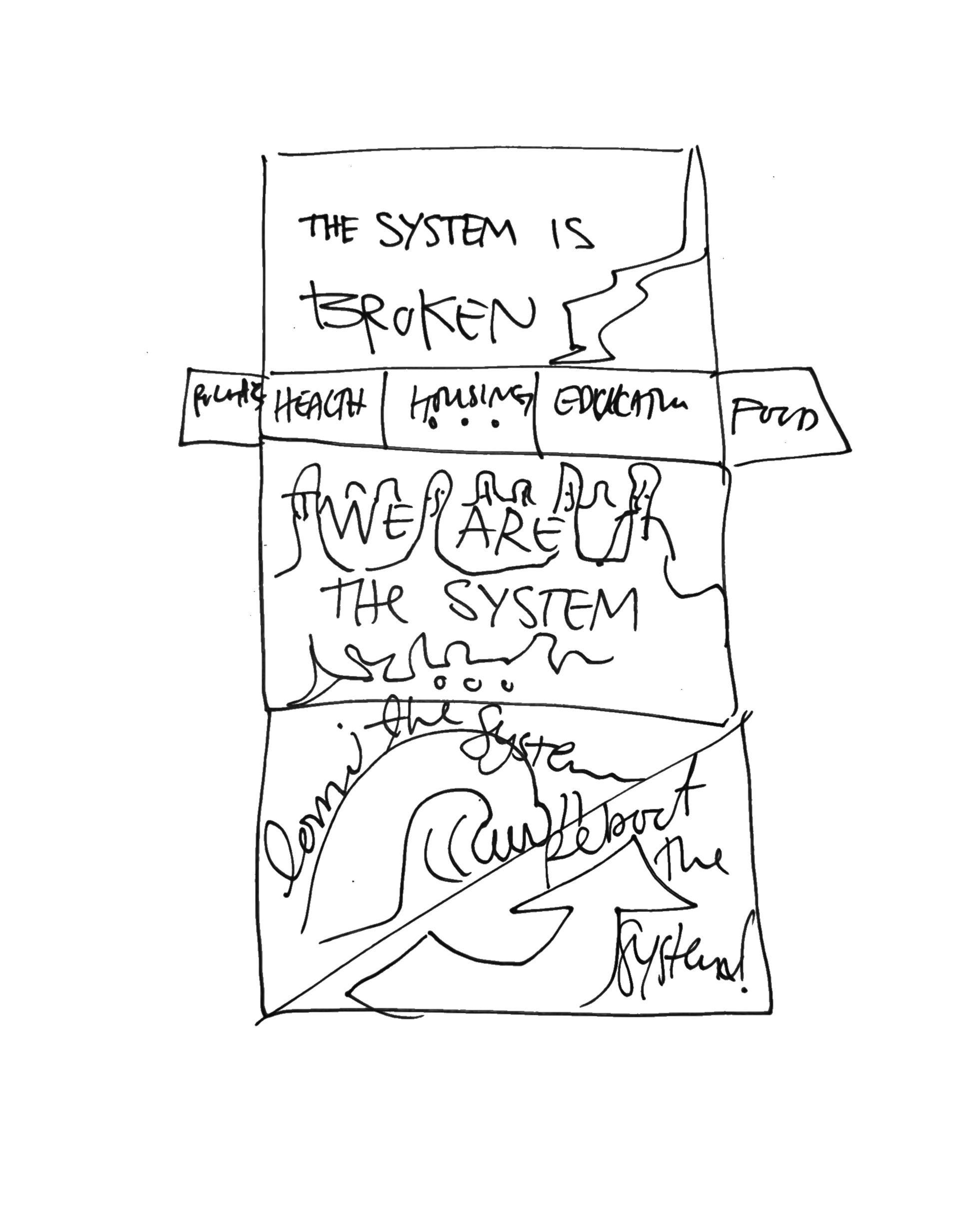
Most efforts to change the world proceed as if systems are primarily problems to be solved: poverty, climate change, failing schools, broken healthcare, dysfunctional governance. In response, we design policies, launch programs, build technologies, or mobilize movements with the expectation that targeted action will produce targeted results.
Across domains, the surface diversity is striking—housing interventions in one place, education reform in another, climate policy elsewhere—but underneath this diversity sits a familiar architecture of intent: identify a problem, apply an intervention, measure an outcome.
And yet, despite decades of increasingly sophisticated effort, systems often do not behave as expected. Well-designed policies underperform. Movements surge and dissipate. Technologies scale but fail to transform underlying conditions. The same patterns recur with subtle variations.
Something deeper is structuring the outcome space.
The core difficulty is that most interventions are designed as if systems are responsive to direct action alone. But real systems are not mechanical—they are interpretive, adaptive, and self-reinforcing.
They do not simply “receive” interventions. They reorganize around them, filtering them through layers of perception, incentive, legitimacy, and power.
This creates a persistent gap:
We change inputs, but not system behavior
We fix symptoms, but not recursive causes
We act on visible problems, while invisible structures regenerate them
At the center of this gap is a missing model of how systems actually transform.
Without it, intervention design becomes reactive, fragmented, and overly reliant on intuition or ideology rather than a reproducible logic of change.
So the fundamental question becomes:
What is the underlying pattern by which systems actually change in a reliable and repeatable way—regardless of domain, scale, or institutional context?
In other words:
What is the Deep Pattern of intervention itself?
Systems change when interventions simultaneously alter what is perceived, what is rewarded, and what is believed—across interacting layers of meaning and power—until feedback loops reorganize into a new stable attractor.
This can be understood as a layered mechanism rather than a single action.
1. Systems change begins with perception
A system cannot respond to what it cannot see.
Before any policy, reform, or movement can take effect, certain realities must become legible:
data must be collected
experiences must be named
harms must become visible
patterns must become measurable or narratable
Perception is not neutral; it is constructed.
And therefore:
Systems do not respond to reality directly. They respond to what is made visible within their cognitive and institutional field.
A crisis that is not seen does not exist operationally. A condition that is seen differently is acted upon differently.
2. Systems stabilize around incentives
Once something is visible, systems respond through allocation:
money
attention
authority
risk
friction
Incentives determine what persists.
This is where many interventions concentrate: policy reform, funding shifts, regulatory change, behavioral nudges.
But incentives alone are insufficient if deeper layers remain unchanged.
Because:
Systems reproduce whatever they systematically reward, even if everyone agrees it is undesirable.
3. Systems ultimately rest on belief
Beneath perception and incentive lies a deeper stabilizer: legitimacy.
Every system implicitly answers questions like:
What is fair?
What is normal?
What is possible?
Who is credible?
What deserves care?
These are not technical questions. They are cultural and mythic.
And they are often the least visible layer of intervention design.
Yet:
Systems resist change when interventions contradict the beliefs that justify them.
Without shifts in worldview, structural change is often temporary or superficial.
4. Systems operate through layered reality (not single-level causality)
These dynamics unfold simultaneously across multiple strata:
Litany: events, headlines, symptoms
System: structures, policies, incentives
Worldview: assumptions and ideologies
Myth: deep narratives about identity and meaning
Effective interventions rarely operate at only one layer.
The deeper the transformation required, the more layers must be engaged.
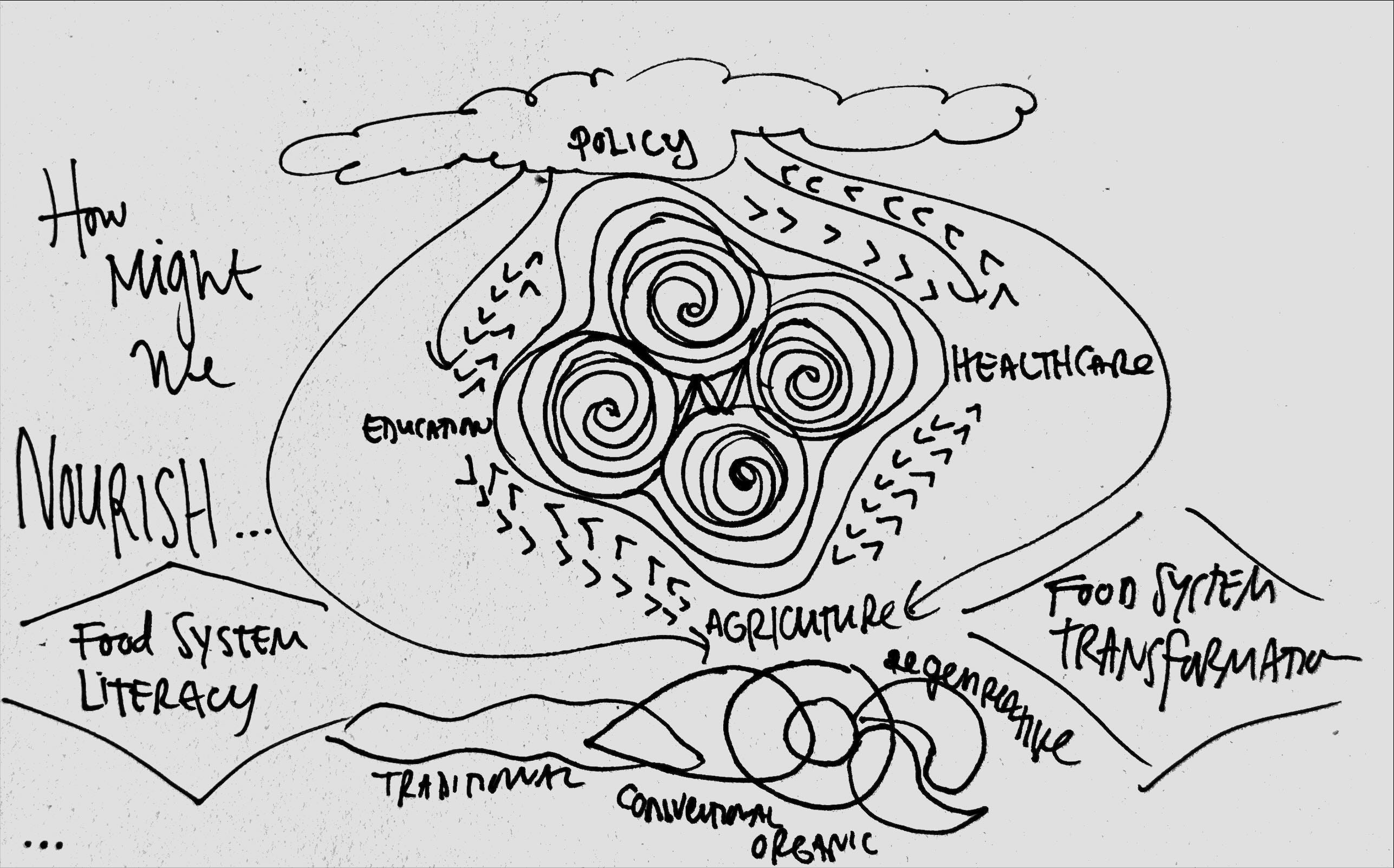
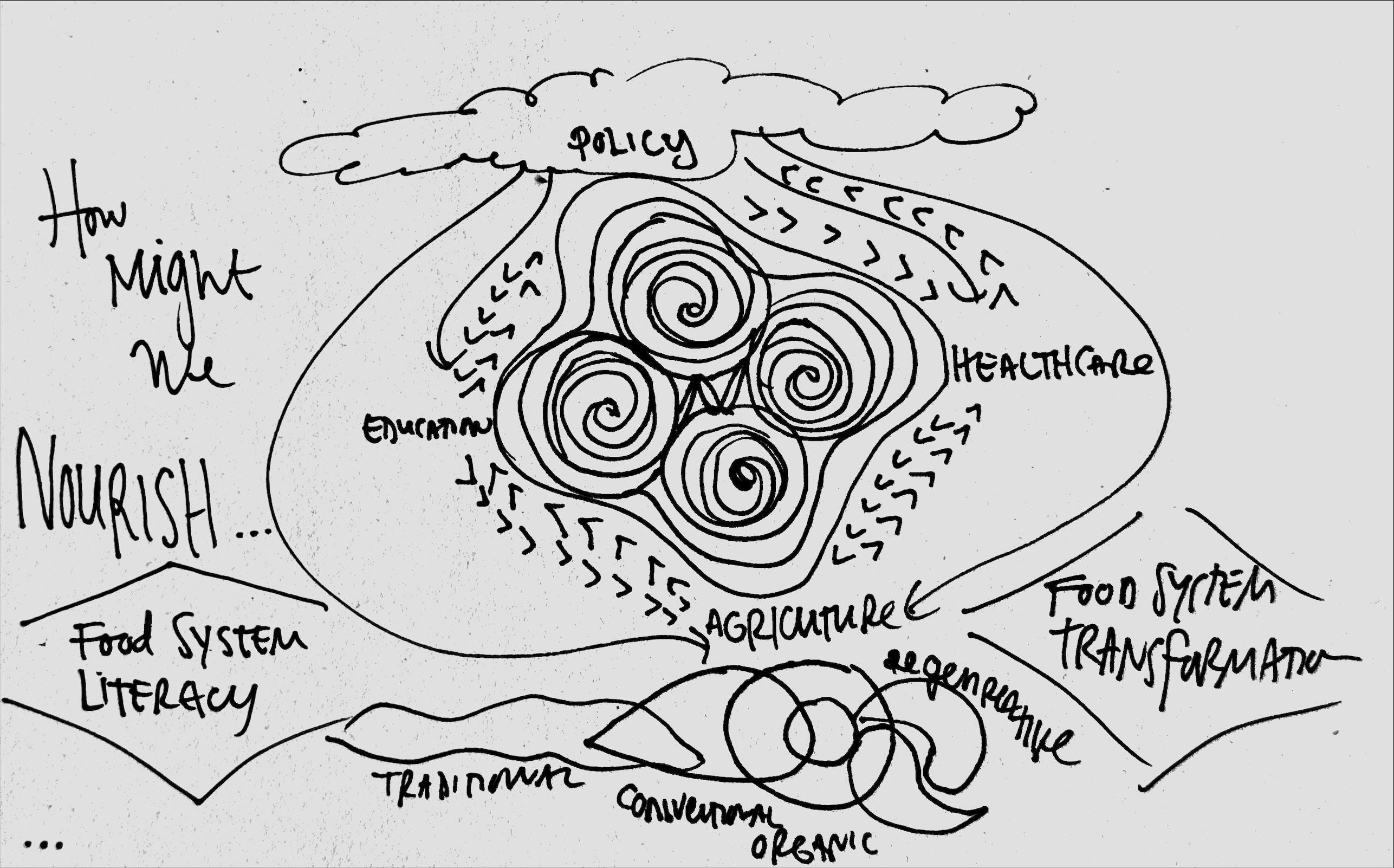
5. Systems are shaped by power directionality
Change does not flow through systems uniformly. It moves through distinct channels:
Top-down: regulation, enforcement, formal authority
Bottom-up: movements, behavior, collective action
Middle-out: institutions, platforms, professions
Most durable transformations emerge not from one channel, but from alignment across channels.
When these directions reinforce each other, change stabilizes. When they conflict, change dissipates.
6. Systems are governed by feedback loops
At the structural core, systems are not collections of actors—they are networks of reinforcement:
trust creates participation, which builds legitimacy, which reinforces trust
price shapes demand, which shapes supply, which reshapes price
visibility drives accountability, which changes behavior, which increases visibility
Interventions succeed when they:
introduce new loops
weaken existing loops
redirect loop outputs
or change loop speed and sensitivity
If feedback structures remain intact, surface changes are eventually absorbed.
7. The Deep Pattern: attractor shift
When perception, incentives, belief, and feedback loops align, something more fundamental occurs:
The system reorganizes around a new equilibrium—a new “attractor” that feels self-evident.
At this point:
new behaviors feel normal
old behaviors feel costly or illegible
enforcement becomes less necessary
compliance becomes cultural rather than imposed
This is the point at which intervention becomes indistinguishable from environment.
Final synthesis
The Deep Pattern of Intervention Design Thinking can be stated simply:
Systems change when interventions reshape what is seen, what is rewarded, and what is believed—across layered realities and power structures—until feedback loops reorganize into a new stable attractor.
This reframes intervention design not as isolated action, but as:
perception engineering
incentive redesign
belief transformation
and feedback reconfiguration
working together as a single coherent practice.
Implication
If this is true, then intervention design is no longer primarily about “solutions.”
It becomes:
The disciplined craft of shifting the conditions under which systems recognize reality, assign value, and reproduce themselves.
That is the Deep Pattern.
1. Perception (What a system can see)
* What is currently real but invisible in this system?
* Who experiences the system most directly, but least legibly?
* What forms of suffering, friction, or creativity are systematically not measured?
* If we changed what is observable, what would immediately become governable?
* What does the system actively filter out as noise or illegitimate signal?
⸻
2. Incentives (What a system rewards or punishes)
* What behavior is the system quietly but consistently rewarding, even if it publicly disavows it?
* Where are people “doing the wrong thing for the right reasons” because of incentive misalignment?
* What would change if we removed friction rather than added force?
* Which incentives are structural (unseen) versus intentional (designed)?
* Where are we paying for outcomes we say we don’t want?
⸻
3. Belief / Worldview (What feels true or normal)
* What assumptions are so embedded they no longer appear as beliefs?
* What would become possible if a core “common sense” belief were no longer true?
* Who benefits from the current definition of “normal”?
* What is the system protecting emotionally, not just structurally?
* What stories make the current system feel inevitable rather than designed?
⸻
4. Visibility & Legibility (What can be known and acted upon)
* What would change if lived experience became primary data, not secondary anecdote?
* Where is the system over-legible (too many metrics) versus under-legible (blind spots)?
* What is being translated poorly between levels (community → institution, institution → policy)?
* Where is complexity being flattened in ways that distort action?
* What cannot currently be “spoken into policy”?
⸻
5. Power Direction (How change moves)
* Where is bottom-up energy being absorbed without structural change?
* Where is top-down authority acting without ground-level legitimacy?
* What is middle-out infrastructure quietly enabling or blocking transformation?
* Where are alliances already forming that the system has not yet recognized?
* What power is present but unactivated?
⸻
6. Feedback Loops (How the system learns or fails to learn)
* What does the system reliably learn too slowly?
* What does it repeatedly misinterpret as signal vs noise?
* Where are feedback loops broken, delayed, or gamed?
* What behavior reinforces the conditions that created the problem?
* What would happen if the system could “feel” consequences faster?
⸻
7. Attractor Dynamics (What the system is becoming)
* What does the system currently make easier and easier over time?
* What future is the system quietly optimizing for, regardless of stated intent?
* If nothing changed, what state would the system naturally settle into?
* What alternative attractor already exists in small pockets of reality?
* What would it take for a new normal to feel obvious rather than imposed?
⸻
8. Intervention Design (Synthesis layer)
* Where can a small shift produce cascading changes across multiple layers at once?
* What intervention would simultaneously change perception, incentives, and belief?
* What is the minimum viable disruption required to alter a feedback loop?
* Where is the system already trying to heal itself, and how could we amplify that?
* What would it mean for an intervention to become self-sustaining rather than externally maintained?
⸻
9. Meta-question (the deepest layer)
* What kind of consciousness is required to perceive this system differently in the first place?